Jordan

In light of the financial commitment undertaken by Italy at the 2016 London Conference to support the country in coping with the devastating impact of the Syrian crisis, Jordan was included in the 2016-2018 planning document among the priority countries for the Italian cooperation.

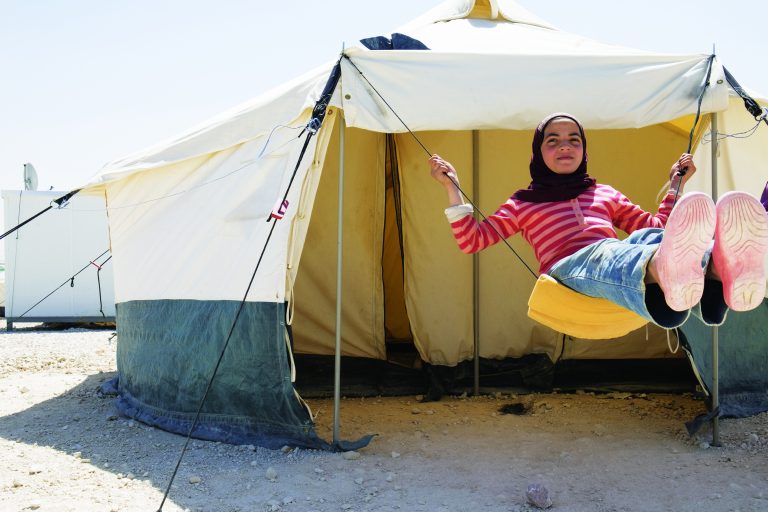
Located in the heart of the Middle East and independent since 1948, Jordan has a recent history of rapid population growth due to regional crises and subsequent movements of people. The country has in fact welcomed people fleeing the Lebanese civil war, Iraqis seeking refuge after the Gulf War and Iraq War, and a large number of Palestinians coming from the West Bank and Gaza Strip. Since March 2011, with the exacerbation of the Syrian crisis, unprecedented numbers of migrants from Syria have arrived in Jordan.

Although not a signatory to the 1951 Convention relating to the status of refugees, Jordan has accepted a number of migrants that, to date, represents almost 30% of the total population.

The International Cooperation strategies in Jordan prior to 2011, with the exception of the Palestinian issue, were characterized by strictly socio-economic interventions.

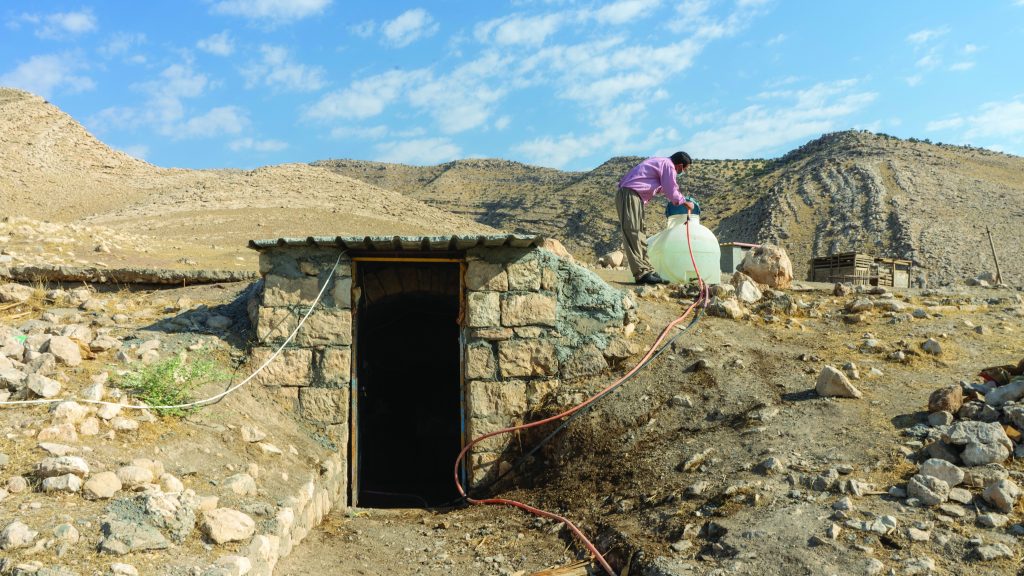
Started in 2011, the Syrian crisis has had significant repercussions on the socio-economic stability and security of Jordan, which add to the already present need to implement political-social reforms aimed at improving the economic condition of the country. The massive influx of Syrian refugees, to whom access to public services has been granted (although with some limitations) on a par with the local population, has put a strain on the ability of the country to maintain a qualitatively and quantitatively adequate level of services to the citizens. In particular, there has been competition on the informal and unskilled labour market and on the use of water, which is an already scarce commodity in Jordan.

The economic burden on the public balance derived from the increased demand for services is quantified by the Jordanian government at USD 10.288 billion from 2011 to 2016. However, domestic markets have reacted quite well to the increase in demand for primary goods, whose prices have not significantly increased in the last 4 years – except for housing and bread prices.

The International Monetary Fund estimates that 26% of the Jordanian economy is informal. It is estimated that the consumption of the already scarce water resources has increased up to 40% in the areas of greatest concentration of the Syrian refugee population.

Despite the generous influx of money made available by the international community in the form of humanitarian aid and development aid, more than 80% of Syrian refugees living in urban and rural settings continue to live below the poverty line; 39% have no access to sufficient quantities of food (and are therefore classified as food insecure) and a further 26% are at risk of being in a state of food insecurity. Child labour has doubled compared to 2007 and involves almost 70,000 children, mostly Syrians, 64% of whom are employed in potentially dangerous conditions and at risk of abuse, while 28% of them are under the age of 14.

Tourism is one of the country’s leading economic sectors, and has excellent growth potential. Nevertheless, the investments of the Jordanian Government have focused above all on improving infrastructure, promotion and services, and to a lesser extent on the conservation and enhancement of cultural heritage.
Insights

In light of the financial commitment undertaken by Italy at the 2016 London Conference to support the country in coping with the devastating impact of the Syrian crisis, Jordan was included in the 2016-2018 planning document among the priority countries for the Italian cooperation. Efforts to ensure the allocation of priorities and the setting of efficient targets to pursue sustainable and long-term improvement initiatives have been applied consistently, within a participatory approach that increases the participation of local Institutions.

Following the escalation of the Syrian conflict, from 2012 to 2020 Italian Cooperation invested €77 million in Jordan to support both refugees fleeing from Syria and the most vulnerable Jordanian host communities affected by the pressure of the crisis. In support of International Organizations (ICRC, UNHCR, UNICEF, UNOPS, UN Women, WFP, WHO), 55% of the funds were allocated through the multilateral channel, while 45% were allocated through the bilateral channel (humanitarian interventions, funding to Civil Society Organizations, and direct management).

In 2020, Italian Cooperation allocated almost €13.75 million to assist Civil Society Organizations and International Organizations in implementing projects in the sectors of Education, Health, Infrastructure, Livelihoods, Food Security, and Protection, of which €6.25 million were earmarked for emergency initiatives and €7.5 million for LRRD (Linking Relief, Rehabilitation and Development) initiatives to be implemented starting from 2021.

The programming of ordinary funds prior to 2019 was limited to a series of initiatives closely linked to the need to respond to the consequences of the Syrian crisis in the country. These initiatives did not focus on humanitarian assistance but rather on strengthening institutional capacities, particularly those of the Jordanian Ministry of Municipal Affairs.

With the signing of the new Memorandum of Understanding (MoU) with Jordan, the Italian Government committed to providing grant funding of no less than €19 million and concessional loans amounting to €143.8 million for the period 2017–2019. These funds are intended to finance initiatives falling under the strategic priorities identified by the two parties, in the following areas of intervention: promotion of sustainable growth through the efficient use of local resources; social cohesion; and governance.

In March 2017 the Italian government signed a Memorandum of Understanding (MoU) with the Jordanian Government for the period 2017-2019 aimed at strengthening bilateral cooperation and contributing to the achievement of the objectives set out in the Jordanian Government’s planning documents: the 2016-2018  Development Programme and the Jordanian plan in response to the Syrian crisis – Jordan Response Plan (JRP).

AICS Amman is currently implementing programmes based on the strategic priorities identified in the MoU, as follows:

  • 1. sustainable growth through the efficient use of local resources;
  • 2. investing in people and social cohesion; and
  • 3. governance

A new Framework Agreement between Italy and Jordan was signed on May 13, 2018, replacing the previous agreement of June 16, 1965.

The Framework Agreement intends (i) to improve the existing relations between the two countries, with specific reference to the Development Cooperation sector, (ii) to implement the activities agreed upon and to be agreed between the two countries and financed by the Italian Republic, or from other Italian entities, in the most efficient possible way, (iii) reaffirm the Italian availability to support the development strategies of Jordan with projects that are carried out in compliance with these strategies, international principles and obligations deriving from the Italian membership of the European Union, (iv) encourage cooperation between public and private entities, as well as between national and international organizations, in order to implement cooperation and development initiatives.

In particular, Article 4 of the Agreement defines the creation of a 3-year Country Programme with the aim of creating a specific development and cooperation plan, including the definition of sector priorities, expected results, and implementation methods.

The agreement intends to initiate a structured medium and long-term cooperation in favour of the Hashemite Kingdom of Jordan that goes beyond the response to the Syrian humanitarian crisis.

Now entering its 9th year,  the protracted conflict in Syria has created a complex humanitarian emergency in the Arab Region, with two thirds of the population displaced and socioeconomic pressures on the neighbouring states. AICS provides assistance and protection to population inside Syria, as well as refugees and host communities affected by the crisis in Iraq, Jordan, Lebanon and Turkey, to ensure that vulnerable people have their basic needs covered and to enhance livelihoods opportunities.

SYRIA, A HUMANITARIAN CRISIS

The Syrian conflict is one of the major humanitarian crises in recent history. It is estimated that the number of deaths due to direct and indirect causes – given by the limited access to essential goods and services – ranges from 320,000 to almost 500,000.

Since the beginning of the crisis, according to the UN Office for the Coordination of Human Affairs (UNOCHA), about 13.1 million people in Syria have been in need of humanitarian assistance. Among these, 5.6 million people have faced the severe consequences of the escalation of hostilities, forced migration and limited access to basic goods and services.

Of the 5.5 million Syrian refugees resettled worldwide, mostly in neighboring countries, a very limited number have returned to Syria, while some 6.3 million, of which the majority are minor, are internally displaced.

No humanitarian assistance or protection service can compensate for the lack of a political solution to the crisis. In this context, the protection of persons affected and/or at risk constitutes for the Italian Cooperation the basis for the programming of the humanitarian response.

THE ITALIAN CONTRIBUTION

From the end of 2012 to today, the Italian Cooperation has allocated around 286 million euros in response to the Syrian crisis: in Syria (27%), in neighboring countries (Lebanon 38%, Jordan 25%, Iraq 1%, Turkey 0.7 %) and at the regional level (7%), in line with the national plans of the various Governments and with the plans of the United Nations

IN SIRIA

In the country devastated by the conflict, the Italian Cooperation intervened with € 46,261,453  allocated to interventions in different regions of the country, both in the areas controlled by the Government and not. The projects, realized in collaboration with CSOs working in the area and with UN agencies, including UNHCR, UNRWA, UNI-CEF, WHO, OCHA, IOM, WFP and FAO, respond to the needs of internally displaced people, in terms of Food security, Protection, Child protection, support to women through income-generating activities, and access to primary services, including health, psycho-social and educational services.

Last update: 11/03/2026, 16:14

Iraq

In Iraq, Italian Cooperation is historically active in support of the most vulnerable populations, namely refugees, displaced persons, ethnic-religious minorities, including Christians and Yazidis, women, minors and people with disabilities.

Iraq
Read more In Iraq, Italian Cooperation is historically active in support of the most vulnerable populations, namely refugees, displaced persons, ethnic-religious minorities, including Christians and Yazidis, women, minors and people with disabilities.

Partners

The partnership between Italy and Jordan is based on shared values of peace, human rights, and sustainable development, and has been further strengthened by their common commitment to the objectives of the United Nations 2030 Agenda.

Partners
Read more The partnership between Italy and Jordan is based on shared values of peace, human rights, and sustainable development, and has been further strengthened by their common commitment to the objectives of the United Nations 2030 Agenda.

Head of office

Michele Romano has been serving as Head of AICS Amman Office since February 4th, 2026

Head of office
Read more Michele Romano has been serving as Head of AICS Amman Office since February 4th, 2026

Profile and objectives

The Agency established the Amman office in July 2016, with the aim of implementing international cooperation initiatives to improve people’s living conditions, promote sustainable development, strengthen democratic institutions and rule of law, as well as sustain post-conflict stabilization with particular attention to the Syrian crisis.

Profile and objectives
Read more The Agency established the Amman office in July 2016, with the aim of implementing international cooperation initiatives to improve people’s living conditions, promote sustainable development, strengthen democratic institutions and rule of law, as well as sustain post-conflict stabilization with particular attention to the Syrian crisis.