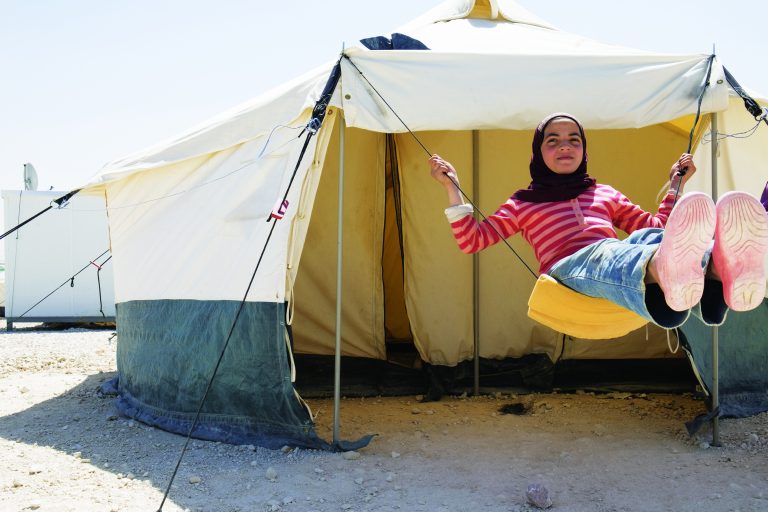
Due to the civil war in Syria and the subsequent national conflict, almost 2 million people are currently displaced in Iraq, in addition to more than 4 million returnees ,and nearly 250 thousand Syrian refugees that are hosted in the Autonomous Region of Iraqi Kurdistan (KRI) since 2014. Despite the conclusion of military operations for the liberation of the territories occupied by ISIS, the protracted Iraqi crisis is still one of the most complex challenges posed to the international community. As identified in the Humanitarian Response Plan 2018 coordinated by UN OCHA, the conflict and the political crisis of the last four years have affected a population of almost 9 million individuals that are now in need of humanitarian assistance. The assessments of damages and losses conducted in the liberated areas by the Iraqi Ministry of Planning and analyzed by the World Bank, estimate that the reconstruction will require at least 10 years and would cost over 88 billion dollars.
In 2014, 2,5 million civilians were displaced within Iraq. In 2015, more than a million people left their homes to find shelter in the Autonomous Region of Iraqi Kurdistan. In 2016, another 700,000 people fled, and 1,7 million civilians were displaced in 2017. The population movements were multi-directional: while hundreds of thousands of people left their homes, hundreds of thousands have returned. The pace and scale of the phenomenon of internal displacement have made the Iraqi crisis one of the largest and most unstable in the world.
Based on what was identified in the humanitarian needs assessment for 2019, elaborated under the coordination of UN OCHA, the country estimates some 6,7 million people (18% of the Iraqi population) in need of humanitarian assistance and protection, including 3,3 million children and 3,3 million women and girls. Nearly 5.5 million individuals need health care, and 2,6 million children need to access education services. People perceived as affiliated to extremist groups are among the most vulnerable population along with women, children, people with disabilities, and the elderly.
The distribution of displaced and returnees in the country sees the governorate of Nineveh as the centre of the humanitarian crisis. The phenomenon of displacement also affects the neighbouring areas of the Kurdish Region. As for the return areas, in addition to Nineveh, the Anbar governorate is also the most affected by the phenomenon, although the safety conditions in both areas are not yet fully restored.
The state of emergency has created profound negative effects on the local social and economic system, with a consequent progressive deterioration of the living conditions of refugees and displaced persons, as well as host communities and local populations returning to their places of origin freed from the occupation of ISIS Conflict and slowing economic growth have led to rising unemployment and poverty rates. The protracted Syrian regional crisis, increased by the political and economic crisis at the national level – mainly due to the decline in revenues from the sale of oil – the conflict with ISIS and tensions between the national and regional governments, has reduced the capacity of refugees and displaced people to provide for their livelihoods.
The progressive depletion of the savings of refugees and displaced persons, as well as the reduction of job opportunities due to the increase in population in areas of displacement, have worsened the economic capacity of the already vulnerable population. Increased competition in the labour market has strengthened the trend towards the expanding of informal work, characterized by low wages and coercive practices. Agricultural production has been almost halved, undermining the country’s food security and forcing hundreds of thousands of people to migrate to urban areas seeking employment.